The Psychology of Ecology

Among people who care about conscious living, it’s hard to find a bigger or more fashionable issue than the green movement. That’s a very good thing, because it’s also hard to find an issue that merits more immediate action than the environmental crisis. It’s inspiring to watch how quickly the popularity of ecological consumption has spread. You’d be hard pressed to find any issue that has gone absolutely viral through our cultural consciousness with such roadrunner speed. In New York City, even one year ago, store clerks would roll their eyes at me when I told them I didn’t need them to put the roll of Chapstick I just bought into a huge plastic bag (have you ever had your Chapstick double-bagged?). Now, more and more often, they politely ask me if I need a bag, and when I pull my own reusable nylon one from my pocket, they are less likely to seem like I ruined their day. Government legislation aimed at better environmental policies is also popping up around the globe, from Mumbai to Ireland to California, where a plan recently adopted by the state seeks to cut CO2 emissions by a whopping (but seemingly necessary) 80 percent by 2050.
It is now haute couture to do something noticeable to let the world know that we are on board with the cause of environmental salvation, whether it’s waiting on a long line to pick up a new handbag that tells everybody “I am not a plastic bag,” sipping from a metal water bottle, or driving a hybrid car. Yet for all of the work going into this fantastic movement, it seems that something is more or less missing from our collective efforts to “go green.”
To date, the Green movement seems to be very much focused on the external world of objects and resources. Going green is all about external stuff: how to get more eco (and more fashionable) stuff, or else how to use the stuff we already have more effectively and less carelessly. For some folks, going green means arranging your lifestyle so you simply have way less stuff. All of these investigations are crucial. Collecting information about how to make compassionate choices in the context of a huge planet and an interwoven economy is an absolutely eye-opening practice, no matter which specific issue is closest to your heart.
But what about the internal landscape of consumption—the subtleties of our state of mind as we attempt to change our patterns? After all, we are the very individuals who have to get, use, or stop ourselves from using all this stuff! How do our mental habits and identities fuel our choices? How do our minds embrace or reject a change of habit? In the Green movement to date, there is precious little investigation regarding the psychology of ecology.
Let’s accept, more or less, the collective and individual lifestyles we’ve all developed. We have to place ourselves in a cultural place and time to see ourselves clearly. For most (but not all) of us, contemplating our actions in an interwoven ecological context is a fairly new practice, an unfamiliar terrain. Most of us in the United States today grew up with the following general rules: If we wanted to get something, we usually got it. If things went well, we got it IMMEDIATELY. Whether children or adults, we played with our toy until inevitable boredom set in. Then we tied it up in a trash bag and sent it along to the landfill. We had no idea how or where the resources necessary to create it were extracted from the earth. Nor did we realize what processes of labor went into producing the item. And what happened once that gently used object was wrapped up with a twist tie and set out for the garbage man to collect? It sure went somewhere, but no place we were ever called upon to worry about. Until now.
Our culture of convenience has habitually alienated us from the truth of interdependence—that nothing ever happens in a vacuum. Interdependence is the most crucial concept that Buddhist philosophy has to offer the twenty-first century world, although Buddhism has no monopoly on the idea. Interdependence invites us to expand our awareness and to bear witness to the complex network of conditioning that produces each of our habitual actions, as well as the larger context of outcomes produced by our lifestyle choices. As ignorant participants in complicated processes of global production and consumption, we have had precisely this contextual awareness stripped from us. This ignorance isn’t anyone’s fault, but it means most of us have developed some deeply grooved mental habits regarding how we impulsively interact with the world of objects, i.e., how we use stuff. As actress Carrie Fisher put it simply, until recently our societal slogan of consumption has been this: instant gratification takes too long.
At the Interdependence Project, we practice monthlong periods of low-impact consumption. During these months, community members combine a practice of mindfulness meditation with a commitment to implement lifestyle strategies that reduce our footprint on Earth’s delicate landscape. The practice is meant to be personal and exploratory rather than dogmatic and prescribed. In addition to a daily session of mindfulness meditation, community members adopt certain intentions for the month. For some, it might mean refraining from using plastic bags and disposable cups and napkins; for others, it means experimenting with eating less meat, maybe practicing veganism, or even learning to compost and logging less miles on the car’s odometer. Why do we do all this? Of course part of our mission is to educate ourselves, to gather information, through personal experience, regarding the most effective ways to be responsible stewards of Planet Earth. But more internally, the point of these months is to practice an active mindfulness, to witness what happens in our minds when we try to shift our habits.
If we carefully examine our habits of consumption with mindfulness techniques, the examination reveals so many assumptions about who we are as individuals, and who we think we need to be. Complex issues of identity and self-worth pop up all over the place, like some minefield of jack-in-the-boxes. Watching our own minds as we navigate consumption choices may reveal all kinds of inadequacies: grinding pangs of lack, mirror-shattering moments of self-loathing, righteous claims to entitlement, deeply submerged guilt regarding our first-world privileges, or a swarm of other internal responses. Buddhist meditation practices are perfectly suited to the difficult task of revealing the subtleties of our mental processes.
Until we each have some direct familiarity with these mental processes, we aren’t going to discover a full solution to the ecological crisis. If we really want to “go green,” we need a methodology for compassionately understanding the mechanisms of our own minds, because we’ve become way too habituated to the fake, styrofoam convenience of ignoring how our minds really work. The mind is at the root of all of our actions in the external world. If we don’t each learn how to watch it moment by moment, then our efforts to avert societal disaster will be akin to trying to guide the Titanic clear of the iceberg without learning how to steer the ship.
Buddhist meditation launches an individual headlong into a curious yet rigorous examination of desire. Overly simplistic formulations of Buddhist philosophy make many folks believe that desire is a bad thing, plain and simple. But the true Buddhist perspective on the all-too-human experience called desire—whether it’s hunger for a slice of pepperoni pizza, longing for world peace, or just some good old-fashioned lust—is much more nuanced. Ultimately speaking, Buddhism takes the perspective that desire is 100 percent natural and incredibly positive. The problem, however, is that unchecked fear and unexamined habit can pervert desire into addictive tendencies—habits which are destructive for an individual, harmful for a community, and disastrous for our planet. What Buddhist meditation necessarily reveals to us, moment by moment, is the problematic nature of our impulse for instant gratification.
We all know what it feels like to need something NOW. There’s this incredible itch that can’t really be described, only experienced with awareness. And we all know the temporary and disposable relief of scratching that itch by getting some stuff, acquiring a familiar mode of experience to soothe the intensity of sensation. Without mindfulness, we pick convenience over patience every time, sedating the itch for a short and fleeting moment. But what consistent practice teaches us is that the convenient solution—that instant fix arising from fearful habit—usually leads everyone down the wrong path.
Both yoga and Buddhism offer practices that aid both personal and societal ecology. In asana practice, we are learning to balance and recycle our bodies’ energies so they become more sustainable, less grasping. In mindfulness meditation, we are learning how our thoughts actually function, how those thoughts lead us into action, and how those actions positively or negatively affect us and our planet. In meditation, we are nurturing the very root of the tree of sustainability, which is a healthy and contented relationship to our own mind.
I’ve always felt that the need to practice both yoga and mindfulness meditation constituted another “Inconvenient Truth.” It’s inconvenient because neither practice is easy to start or maintain (at least not for me). Both practices require a type of courage and willingness to look in the mirror that’s often hard to summon. But then again, as practitioners of these mindful disciplines, we ought to be the first ones to recognize the crucial connections between our internal thought patterns and our actions in the interdependent world. Let’s also be the ones standing up to proclaim that the constant quest for convenience, wrapped in the cellophane of ignorant habit, is what got us into this giant mess to begin with.
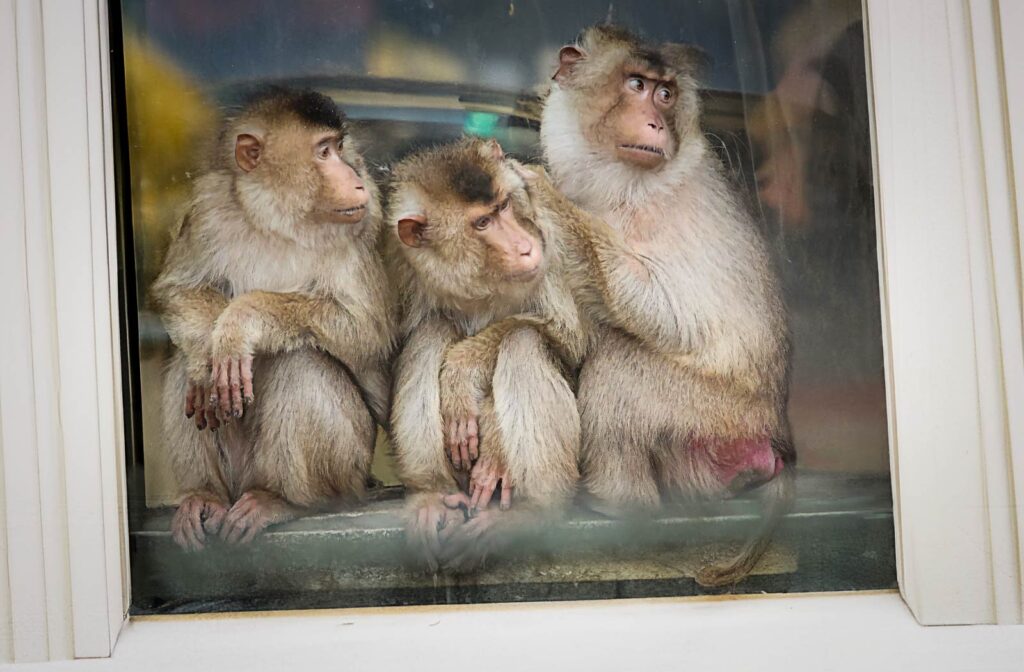
Image by AZ Rainman, used under Creative Commons license.
© 2008 Kripalu Center for Yoga & Health. Reprinted with permission. Find out more about Kripalu at www.kripalu.org.
Tweet- 7-15-08
- Ethan Nichtern's blog
- Login or register to post comments
- Printer-friendly version


Comments
Fear can lead to change
Hi True
Ever consider that it may be prudent to feel fear when you’re destroying the planet’s ecology in exchange for all the junk that they’re selling you? Cheap, quick fix rubbish provided at the expense of other species and societies?
Most people don’t need a lecture but they need the truth – might ruin your day but there it is.
Must we have fun with everything? Are we not adults that need to know what we’ve done and what needs to be done?
A common misconception here in the UK is that Americans are a nation of children: who’ll stay quiet as long as they can continue to keep their toy guns and big trucks, eat as much sweet junk as they like and watch TV as much as they want.
As the biggest polluting soceity this earth has ever known, maybe you guys need to get serious first? Just an idea.
Didn't note the word 'misconception'?
Insult?
I don't know where you got that from. I was more interested in highlighting the gravitas of the situation.
If you read my comment you'll notice I used the words 'common misconception' - in case you're unclear you could take this to mean i'm reporting a view another than my own.
Elsewhere on this board i've repeatedly stated my admiration for the people of America and don't get invlolved in bashing people.
Seems I hit I nerve judging by your reactionary response.
No, what I meant is that your in the best position to take the lead as you use the most resources per capita and you're supposed to be a 'super power'.
Be world leaders on this
Not at all
Nah, i'm proud to be part of these islands. I'm not embarrased by the misconception because I don't belong to that group of people....I agree about the reality TV though.
But was I was saying before you got aggressive, it makes sense for the US to take a lead on these things as so much of your culture and religion has already swept over the world.
Our redemption surely could be kick started by yours (and all of the capitalist west's) positive actions - for this is what surely counts - not words.
My original objection was to dressing up the message.
Conceded
Monkey blood and True
I was sorry to offend with a singling out of the US when I should have conceded that we're all in the same boat.
However I do think the US could set the example - particularly as you already have some pretty impressive media savvy at your disposal (hence we're here).
I do feel pretty angry at complacency sometimes, which is why I don't think people should be spared the bare bones. Maybe a shock is needed....
I get what you're saying about the terrorism scare mongering - funny as when the IRA were bombing UK cities several times a year we never had the war on terror then - but a cause and effect message similiar to an anti smoking campaign might still be the best way - i.e you can buy this SUV of course but you'll be destroying your children's childrens' future, if that's OK by you sign here'?
the biggest polluting society this world has ever known
Knee-jerk generalizations about entire countries or peoples are obviously of limited use at best. But let's keep the facts in mind. When facts become seen as inflammatory, beware.
The Best Stuff
~Aydra Jenson~. . .
.Keeper of the StarSix.
. . .
Funny enough when I read the little blurb about the article I was thinking to myself 'that sounds an awful lot like this book I'm reading right now, One City. . .and sure enough
. . .
My friend picked it up for me the other day who is a committed Buddhist and does not subscribe to new-age dogmas. I seem to find myself pulled between the attitude of an idealist- righteous and committed, and that of an awakened, conscious being, both accepting and inquisitive.
. . .
Needless to say that when I choose the ladder I find a much easier and exciting path to interacting, communicating and creating.
. . .
7 years ago when I converted to rawfoodism I simply judged and joked about everything that wasn't pure and green. I was militant about the source of everything and about the information available that seemed somehow overlooked and criticized. Being in the Bay, it was easy to live this lifestyle, and more and more people were turning on to it.
. . .
Although, even as this radical change in lifestyle opened gateways of conscious combustion and awareness to the source of things, it also started to kick-up the muck inside my physical, emotional and mental bodies that were not being addressed, not to mention, block me from ideas and social environments which I isolated myself from, feared even.
. . .
Because I attached my getting better to a rigid dogma it lead me to establish an unhealthy relationship to the best food possible. My consumption was not all that conscious as in the end as I fixated myself on eating massive amounts of highly prices raw foods to numb out the pain which was ultimately a deeper matter.
. . .
What I'm getting at is that america is the most addicted country in the world, all of us got it- the white mans dis-ease. He is never satisfied! This behavior certainly now applies to the rising green product movement. and I'm so happy your addressing it (Ethan) cause I'm always ranting about the big business of green and how its actually causing more suffering and anxiety.
. . .
Lets be honest, Buddhism hits the nail on the head by not buying into inadequacy, just cause you can't afford the cork floor installation or the latest in solar developments on your house or business (which solar energy by the way is amongst the worst in inflated costs)- doesn't mean you can't be green. What I've come to learn is that it all comes down to quieting the mental realms which have been arbitrarily programmed to want and have. in this way you simply let-go of the pressure to consume and attain a social stature. If it happens organically, great! building a green dream house is on my list, but I certainly don't stress about having it now, I just allow.
. . .
Assuring yourself that existence simply for the sake of being awake is enough is a place to start. This is only attained through conscious prana, meditation and yoga, not to mention spending more time in the woods. The thing I had to learn to do was keep practicing, keep pouring clean water in until it ran clear. Once you hit that point of really 'knowing' how to breath and relax, to be strong and flexible, you crave it like nothing else, and the best part is, you can't overdose on this stuff. This is the best stuff.
. . .
Its each individuals heros journey. . .to find the holy grail, to return with the elixir of life.
Anyways all you alchemists you, thanks for letting me share a piece of my-story, and Ethan, I'm rather enjoying reading yours and am grateful for your urban and versed Buddhist insite.
. . .Be Well out there, be the best ever!
. . .
BTW for the record. I am now I recovered vegan-raw foodist. About 2 years ago I took up the primal diet which focuses on live animal proteins. We are fortunate to have a source here in LA which provides organic, untreated, live and local when possiable animal products.
Not only do I feel better about the impact these foods have but I consume less, feel and look better and spend A LOT LESS TIME IN THE KITCHEN! haha
. . .
Also, I tend to place a deeper graitude and sacrament around eating now, taking all the life and energy needed to bring it to me into consideration.
there are a lot of branches on the bodhi tree
Nipponzan Myohoji Sangha
if you continue to have difficulties w/ Budhism feel free to contact any nearby human seeking enlightenment. We understand your frustration and will adjust the nature of the universe to accomadate you, mainly because we can, and thats what we do.
Have a most wonderful existence!
The forrest from the trees
It is challenging to confront a bodhistva, or Christian of Hindu (or capitalist for that matter), with the short comings of their belief system. After all most popular belief systems rest rather securely upon the golden rule of compassion. However when we set aside dogmatic rhetoric/potentiality and cast our gaze towards the actual manifestations of the practices of particular belief systems (most have thousands of years of spiritual failings in their wake) we begin to see, with respect to indigenous peoples understanding of their habitats and belief systems/stories which develop there-in, that the majority of popular spiritual practices/beliefs actually aid in the degradation of the natural world (which includes of course all the present inhabitants). Perhaps this is because the various "flavors" of the golden rule are birthed within the specific context of a destructive mind, or civilized mind? It would seem the original context of any belief systems apllies flawlessly in relation to the belief systems origination, geographicaly and demographicaly speaking. However, once removed from the original geographic, demographic context, be it Western Europe or Northern China or where ever, the system of belief must flex and mutate to either the breaking point, in which it would seem absolutely arbitrary to the potential converts, or to the point where it is nearly unrecognisable to its native parents. As we can see in this very thread on this very website, a compassionate intent can at times "draw out" a sense of aggitation from the intended convert, or, a negative energy result. While this may not be the intention of Buddhism it is very clearly, and undeniably a result. Just a passing observation.
accord w/ the times...
How to be "Green"
I Eat Men
I myself have started a mindfulness practice in my consumptive relation to men!! ;-) When I'm feeling really addictive and in need of a sexual or emotional fix, I look at the clock and almost always see 12:20 (my dead dad's birthday), or 4:20. Pot was always the other filler I'd consume to escape the loneliness of not having a partner.
Unwinding co-dependency has been the most challenging mindfulness practice I've ever undertaken. It's maddening at times. Whennever I feel transcendent of my pattern, I see 12:21 on the clock and know I'm free. Scrying is my own personal form of mindfulness practice. Triple digits always show me I'm doing something right and help to restore my faith. I'm a cyborg.
Though meditation doesn't need to stem from Buddhism, Eastern mysticism certainly has spawned the West's interest in mindfulness practices in a way that helps clear some of the cobwebs. Whatever path leads to the route of liberation from the inside out so that more emotional sovereignty is gained, is a path worth checking out. Though eventually all paths lead back to the Source which ultimately defies religion's dictates and forms and even blasphemizes them! In the left-eye feminine mystery path of the School of Horus, there are no prescriptions on how to meditate. Every single plunge back to the Source is completely unique and can never be repeated.
The Tao that can be named is not the true Tao.
Green Green Green Green Green
Some people call The Great
Some people call The Great Creator, Father,
Some people call The Great Creator, Grandfather,
Some people call The Great Creator, Isis, Set, or Horus
Some people call The Great Creator, You or Me
Some people call The Great Creator, God
Some people don't call The Great Creator a name at all... But what's in a name?
And yet I think that many wars have been fought (won and lost) in the name of God... even by those who have thought to name him Love.