Support our Kickstarter

The Golden Compass: The Anti-Narnia?

the golden compass.jpg


At the Telluride Film Festival in 2004, I found myself at a crowded cocktail party jammed up against Bob Shaye, the founder of New Line Cinema. Bob's legendary career had gone all the way from distributing the midnight movie classic Reefer Madness in the '70s, to spearheading the massively successful Lord of The Rings movies. The Return Of The King had just won multiple Oscars, and Shaye was riding high. Now, pressure was on to find the next worldwide fantasy film franchise. Recently, New Line had announced that they had found what they were looking for … in Philip Pullman's challenging fantasy trilogy His Dark MaterialsThe Golden Compass, The Subtle Knife, & The Amber Spyglass. My wife and I were both huge fans of the books, and we told Shaye how excited were were at the prospect of a series of films based on them.

I had first heard of these books at Burning Man exactly one year earlier. Wandering the Playa on an odd, moonless night lit by a freakishly bright planet Mars, I encountered two young men from Portland who had created beautiful, skeletal puppet-animals that swooped around them, attached to their hearts by luminous cords. "They are our Daemons" they explained, having been inspired by the Pullman books. I picked up the The Golden Compass soon thereafter and quickly became hooked.

(Warning, plot spoilers appear in the next three paragraphs).

The trilogy tells a powerful and inspiring tale that struck me as deeply spiritual. In the books, humans from an alternate dimension are linked, for life, with animal familiars called "daemons" who act as externalized soul-bodies. Unlike shamanistic animal spirit guides, these familiars are not gained through a vision quest but are part of one's self from birth. The protagonists of His Dark Materials are a pair of heroic pre-teens who fight a fundamentalist authority, The Magisterium, that seeks to control "original sin" by severing children from their daemons, an act which Pullman harrowingly depicts as profound spiritual murder.

As the trilogy moves into it's final volume, The Amber Spyglass, and becomes more ambitious in scope, our heroes take this fight beyond death, as they discover the true nature of "Hell"; believers in such an afterlife, defined by divine judgement, find themselves in a Hell created solely by their belief that such a place exists. Our hero's quest is to free these miserable souls, trapped in a limbo of self-imprisonment, so they might dissolve and become one with the ecstatic "dust" that makes up the energy of the universe.

Also in the final book (in which most of Pullman's most provocative ideas are presented), the death of "God" is featured, a pathetic aged cripple piloting a heliocopter. In Pullman's Gnostic inspired cosmology, this figure is directly tied to the concept of the Demiurge, a deity who is essentially imperfect, while a greater, transcendent intelligence beyond human comprehension is the true force behind the cosmos. Finally, the young heroine's sexual awakening as she leaves childhood behind is the catalyst that heals the war-ravaged universe, in a conscious reversal of the Eden narrative, where Eve's sinful embrace of pleasure leads to expulsion from paradise.

The Dark Materials books were, in the end, a profound attack on the values of organized religion, and a forceful articulation of an alternative theology, born of a marriage of Eastern philosophy, Gnostic hermetics and quantum physics. I was impressed that New Line had decided to put their considerable muscle behind such a sophisticated take on spirituality, especially at such a time of fundamentalist retrenchment across the world, and I told Shaye so. His response, in retrospect, should not have surprised me, though at at the time I was taken aback:

"If it's up to me, the word 'God' will never appear in conjunction with these films," he said. "I'm going to make sure the story is about the fight against authority in general, not against the church. If the public ever gets the feeling that we are talking about religion in any way, we'll be done for."

* * *

Shaye was eventually proved right. In late February 2008, New Line Cinema ceased being an independent film company, as it was absorbed into it's parent company, Time Warner. Shaye, who had built the company into the biggest independent studio in the world, was out of a job. Industry pundits agreed that one of the factors to blame for his downfall was the "failure" of The Golden Compass, the first film in the projected trilogy, which earned barely more in it's entire North American run than the Disney adaptation of C.S. Lewis The Lion, The Witch, and The Wardrobe did in it's opening weekend.

Despite Shaye's attempts to secularize the film's image, right-wing bloggers attacked the film as a "stealth atheist" campaign from Hollywood. Pullman was an "avowed atheist." The Catholic Church attacked the film (the evil Magisterium of the stories having much in common with the Vatican), and Protestants were appalled by an article Pullman had written for The Guardian in London, attacking the sainted C.S. Lewis' Narnia tales as "one of the most ugly and poisonous things I've ever read."

The Golden Compass ended up being a massive hit everywhere in the world … except the United States. The worldwide market apparently couldn't care less that Pullman was an "atheist." Despite its rejection by U.S. audiences, going forward with the second and third films in the trilogy purely for the worldwide market would be a no brainer. But New Line had bet heavily in the wrong direction – they had pre-sold the foreign run of the films at a fixed rate, relying on the easily influenced North American market to make the film profitable.

For now, the idea of completing the series seems dead in the water thanks to the cultural narcissism of Hollywood, where success isn't success unless it happens in the USA, and executives terrified of alienating the religiously conservative audiences of the heartland.

* * *

In the end, it was Pullman's outspoken debate with the legacy of C.S. Lewis that "outed" the project as theologically challenging. In his Guardian article, timed to coincide with the hundredth anniversary of Lewis's birth, Pullman attacked The Narnia books as being racist and sexist, exposing Christianity's obsession with rejecting life in favor of death:

"One of the most vile moments in the whole of children's literature, to my mind, occurs at the end of The Last Battle, when Aslan reveals to the children that 'the term is over: the holidays have begun,' because 'there was a real railway accident. Your father and mother and all of you are - as you used to call it in the Shadowlands - dead.'

"To solve a narrative problem by killing one of your characters is something many authors have done at one time or another. To slaughter the lot of them, and then claim they're better off, is not honest storytelling: it's propaganda in the service of a life-hating ideology. But that's par for the course. Death is better than life; boys are better than girls; light-coloured people are better than dark-coloured people; and so on. There is no shortage of such nauseating drivel in Narnia, if you can face it."

Pullman also takes on what writer Neil Gaiman would later dub "The Problem of Susan":

"And in The Last Battle, notoriously, there's the turning away of Susan from the Stable (which stands for salvation) because 'She's interested in nothing nowadays except nylons and lipstick and invitations. She always was a jolly sight too keen on being grown-up.' In other words, Susan, like Cinderella, is undergoing a transition from one phase of her life to another. Lewis didn't approve of that. He didn't like women in general, or sexuality at all, at least at the stage in his life when he wrote the Narnia books. He was frightened and appalled at the notion of wanting to grow up. Susan, who did want to grow up, and who might have been the most interesting character in the whole cycle if she'd been allowed to, is a Cinderella in a story where the Ugly Sisters win."

When Pullman started making his provocative if somewhat strident criticisms of the Narnia books in 1998, he was a newly celebrated writer of novels for young adults, trying to get some publicity by going after a sacred cow. The notion that a mere nine years later a pair of multi-million dollar movie franchises would be at stake would have seemed an idea more fantastical than anything in either series of books.

* * *

As I write this article, the second film in the Narnia franchise, Prince Caspian, has entered it's second weekend of release, and although it's trailing behind Iron Man (and slightly behind the popularity of the first Narnia film), it has still earned more stateside revenue than The Golden Compass ever did. Even more than The Lion, The Witch & The Wardrobe, in which a huge battle scene was invented by the filmmakers to flesh out Lewis's rather dainty paragraph-long description, Prince Caspian sells war and crusade to a public hungry to escape into a visceral states of victory and moral certitude.

Lewis's Christianity is not a simplistic, unreflective variety of dogma. He came to his faith midway through life, after embracing the story of Jesus Christ as "a myth that happened to be true." He freed himself to create new myths in service of that truth, and proved very adept at the task. There is something appealing in the notion of a Christ figure in lion form, and the special quality the books have of describing spiritual discovery in terms of imaginative child's play (worlds within wardrobes, indeed) make the Narnia books catnip to the young mind.

But the books also express the uncut prejudices of a colonial world view. Lewis grew up in the age of Rule Britannia and the "white man's burden." In writing for children, he drew wistfully on the values of his own childhood, where a wog is a wog and patriarchy is the natural order. It is interesting to notice how comfortably these notions fit into the Christian moral universe Lewis builds into the Narnia books.

But in the end, moral judgments aside, which books make better movies? The Lion, The Witch & The Wardrobe may have suffered from a certain blandness, but the story feels like it belongs on screen. The simplicity of Lewis's storytelling – the fact that, for the most part, he doesn't explain but merely presents – works as cinema in a way that The Golden Compass has difficulty doing, with its awkward set-up (anytime you need a voice over "explaining" how the world works, you are in trouble) and an "uplifting" ending that feels entirely false.

Despite these structural flaws, which point out the folly of dumbing down Pullman to begin with, The Golden Compass brings vivid life to an amazing world that owes nothing to the cliches of fantasy that Narnia helped build, right down to the refreshing performance of the lead child actress, a scowling young Jodie Foster type who is a million miles away from fawningly "cute." And despite the stated goal of dropping God from the discourse, how could one mistake the villainous Magisterium for anything other than a church, with their long robes and cathedral-like headquarters?

But the first book was never the "problem." It is in the later books that Pullman gets into proselytizing his alternative religious vision. How the filmmakers were going to tackle the notions of a Hell created by the Christian vision of judgement, a young heroine who embraces sexuality to save the Multi-verse, or a usurper demiurge squatting on God's throne, we may sadly never know.

* * *

The question remains: how disingenuous was the stated goal of the filmmakers to skip over Pullman's more provocative themes? Did they really roll the dice thinking that there would be no backlash? Did they feel that they could somehow sneak a serious critique of the last two thousand years of western belief past the cultural watchdogs and into the multiplexes of In God We Trust, Inc.?

Books may not be cool anymore in our hyper-mediated world, but what better way to spread provocative thought?
Pullman's book are subversive in the best possible way. They pass from hand to hand, and in the solitary act of reading, one after another comes into direct contact with a provocative vision, a planting of questioning seeds.

This brings us back to a central question. Is Pullman an atheist? He has often self identified as one. There is something in his attacks on Lewis that smells a bit of the self-satisfied humanist intellectual, and his moral universe is so reasonably balanced with modern progressive values that they seem based in the head more than the heart.

There is a case, however, where he beautifully articulated his goals in taking on such charged and transcendent themes in his writing. In a public interview at The Guardian Hay Festival in 2002, he offered the following:

"When it was possible to have a belief about God and heaven, it represented something we all desired. It had a profound meaning in human life. But when it no longer became possible to believe, a lot of people felt despair. What was the meaning of life? It seems that our nature is so formed that we need a feeling of connectedness with the universe. If there is no longer a king, or a kingdom of heaven, it will have to be a republic in which we are free citizens. We ourselves as citizens have to build the republic of heaven."

(A detailed article by Pullman going deeper into this concept of "The Republic of Heaven" can be found here.)

For many of us, eager to validate a non-hirearchical vision of the divine and yearning to be reunited with our lost anima-animals, Pullman's work brings hope and joy. But until we find away to make the leap, as Lewis did with Christianity, into believing that these are "myths that happen to be real," we will continue to be outmaneuvered by the Magisteriums of the world. In their lack of faith in the power of Pullman's "myth," New Line missed a powerful opportunity to give strength to a truly progressive, post-monotheistic vision that could help us climb out of the self-fufilling "Hell" that we find ourselves in.

Comments

nice

Tony, I enjoyed reading this.

As someone who appreciates both authors and both film series, I was excited to read your comparison. I disagree with you on one point, and I'm curious to hear how you'll respond. At the end of your article you imply that a "truly progressive" vision will be "post monotheistic," but earlier you also suggest that you would like a non-hierarchical vision of the cosmos.

This troubles me. Pullman, in his own way, (as you wrote), seems to me just as much an evangelical. I think that this blind spot for people who want the divine vision you speak of, non-hierarchical, etc, is hugely important.

Being a former Christian evangelical and Fundamentalist, it's important to realize that we universalists are not without an absolute vision of the cosmos.

For those who want the vision you seek, we are not without our own sort of evangelism. Christians, in my experience, really tend to despise evangelical universalists who condemn them specifically for evangelizing.

It's something that deserves far more attention than its getting, in my opinion.

Adam Elenbaas

mea culpa

Thanks for your responce Adam!

I do think Pullman is evangelizing, and I don't feel entirely comfortable with the strident nature of his Narnia critique. His Dark Materials is a conscious attempt to set forward a moral vision, as is Narnia. I don't particularly see anything wrong in that for either author.

I do find it questionable that, on the mainstream level, Narnia's evangelising is accepted without much debate in a way that Pullman's is not. Our popular culture has been consciously promoting Christian values for millennia. I'm just eager for a more level playing field.

I do feel that spiritual dialogue in in our media is heavily stacked in favor of conservative religious thought. If it's not traditional "big three" Western monotheism we are talking, or one of the major Eastern traditions, it's labeled aetheism or new age hoo ha. There seems to be no place for a well articulated alternative to be validated as authentic.

So, mea culpa. I just want the debate set on a higher level.

PS: I don't understand why you consider "post-monotheistic" and "non-hierarchical" to be antithetical values. Please explain!

more


Well, as I'm understanding you more, perhaps you do not see these two values the way I thought you did.

In grad school over the past four years I've been invested into a lot of talk about "post" whateverisms. Their is usually this vibe of liberation, of progress, of "better than," etc.

To me, most "post" whateverisms, are very hierarchical. I see hierarchy as a system deeply engrained in linear time (which isn't good or bad), and I also see "post" whateverisms to be engrained in linear time.

So, for me, it's like....the vision has to be felt. It has to be manifest. It has to be incarnational.

For example, when you say that we're seeking an alternative to the big 3 or the eastern traditions, I do not know that we are. Because, to me, an alternative seems to imply something "other." And again, something is being marginalized. But I say this as someone fully aware of how impossible this paradox feels.

I guess I'm more fond of the idea that the alternative must simply incarnate. It's you. It's me. Maybe we should just see it and know? (Just thinking outloud here) Because intellectually the paradox seems to contain all things....even the ones we want to see as less or other.

Interesting that Pullman and Lewis were both so fond of children for the "feltness" of the vision!


Adam Elenbaas

Explanation: Not Great Film-Making

I agree that New Line made a lot of mistakes in the adaptation from book to film. To my eye, I could see the Jackson-ification of the story (as in Peter Jackson). The first third of "The Golden Compass" had a similar structure and visual feel as "Fellowship of the Ring," as it attempted to introduce us to a complex alternate universe. However, what started as an clever kind of homage quickly revealed itself as unsuccessful copy-and-pasting. The pacing of the movie was rushed, as if someone had a gun to the editor's head, saying "You've got to fit it all in!" Good performances were given short shrift. As you state, too much "tell" (explanation) and not enough "show." The ending was abrupt and misplaced; the book's final moment, where Lyra comes into contact with the Aurora Borealis would have been far, far superior. All that being said, there was much to like about the film. It just didn't come together in a synthesized way. Yes, it's a challenge to adapt such a cerebral piece of fiction, but it could have been done more successfully. I suspect all this was symptomatic of not arriving at story-telling solutions particular to this piece of fiction.

I wouldn't have thought the box office woes of the film were terribly influenced by the anti-christian outcry. However, the disparity in foreign vs. domestic markets begs an explanation. I don't have one, but I do think that if the film had been better crafted, it would have handily overcome such protestations. Either that, or Pullman's books never had more than a niche U.S. market to begin with. Which is just fine, in my opinion. Every fantasy franchise doesn't have to be a mega-blockbuster - maybe that's a strategic mistake on New Line's part.

Pullman's anti-Lewis exertions hold little interest for me and grow more tiresome every time I read about them. Lewis was telling a story particular to his interests, experiences and inspirations. If someone doesn't like them or doesn't agree with them, they can elect to simply not read the books, not see the movies. Or, like Pullman, one can write one's own story, a sort of literary riposte. I admire him greatly for such a tactic, less so for the oft-strident analysis and criticism of Lewis and his work.

Regardless of whatever "life-hating agenda" Pullman perceives Lewis having, I don't see the crime. Killing off all your characters is but one choice. It's Lewis' choice. And it's kind of daring. But more importantly, it's his right to tell his story anyway he damn pleases. I don't buy this "you're screwing up young readers' heads" line. I read the entire Narnia series many times over when I was young. I loved them, wasn't traumatized by the story and never became (to my knowledge) a bigoted, woman-hating fundamentalist. I love "His Dark Materials" as well, for completely different reasons. There's room in the world - and one's psyche - for both.

A Good Story is A Good Story

and when interpreting written words to visuals and sound much gets lost in the translation. I watched the movie and at times felt pushed into accepting premises rapidly and at times felt as though the plot bore down and the central characters and the interaction between them were pushed aside for special effects planted to bring the "concept" of what the author was trying to say, but in essence destroyed the very thing he was saying by making something that was "matter of fact" in the book, supernatural. The greatness of movies lies in the careful manipulation of emotions and not the assault on them. It is the "humanness" that draws the public to a great story and different media have their advantages. The mind's eye is the greatest cinematographer and the author, the best director. -Nick www.onlymoments.wordpress.com

..."and that voice"...(lol)

the "history channel" voice of the bear was Ian McKellan, Gandalf himself! Hee Hee. The biggest crossover to the LOTR movies in evidence. Lot of good it did them.

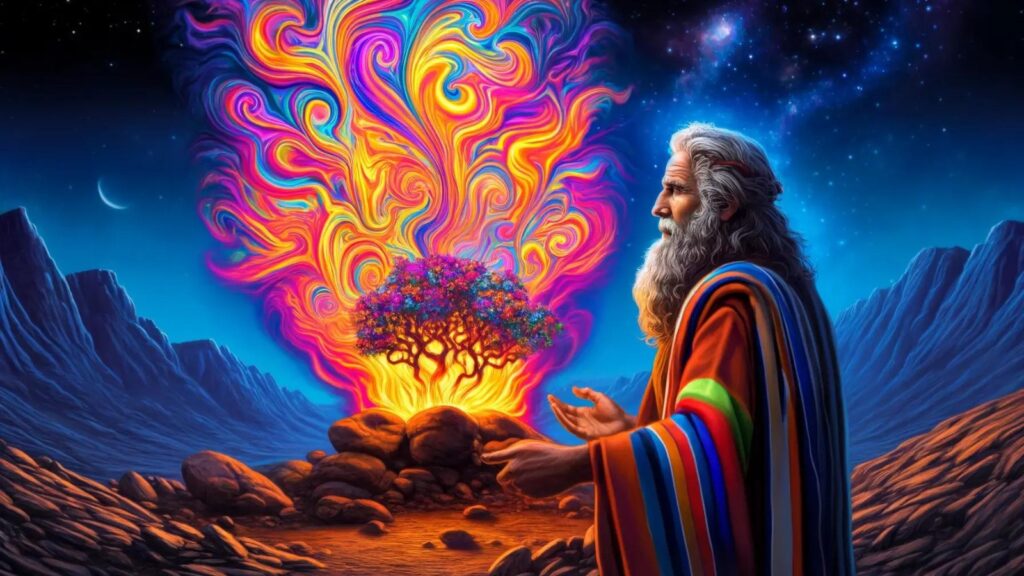
Moses on Mushrooms would have been awesome...

you are right on about the pace and editing, I think.

Peter Jackson will do it!

Come on! Let's bang on the doors and walls of Time Warner! WE WANT SEQUELS!

We do want sequels!

The mind's eye might be the best cinematographer for some but I am not blessed with a powerful visual imagination. I found the examination of morality and mythology fascinating in His Dark Materials. It was a joy to see the story on the big screen. For me it surpassed anything I had imagined visually. The story did not work very well condensed into the length of the film but that made no matter to me as I had read the books.

Be the change you want to see through internal alchemy

Watership Down

When I was about six the whole of my class was taken into the hall to watch Watership Down. My still half formed psyche melded with the screen and story. I experiened it like my own dream. I'll never forget the image of rabbits fighting to get out of a warren filled with poison gas only to die and then be churned up by machinery. There's a dog loose in the woods!
Be the change you want to see through internal alchemy

Was Pullman influenced by Others?

Thoughtfully I was reading an old book yesterday, printed in 1974, Forbidden Universe by Leo Talamonti. It had been translated from the original language, Italian. On page 22 he states: "Socrates, as Plato tells us in the Theaetetus, had a secret counsellor which he called his daimon and which advised him from time to time in practical matters when his rational judgement would have led him astray." This sounds very like Pullman's daemon mentioned in his Dark Materials and suggests that he may have taken the idea from ancient Greece! As for Pullman's books, I have to say that I enjoyed them immensely, and I can understand a hatred of authority, whether it be of a political, commercial, or religious form. I have been feeling this myself for many years now, but I am doing my best to find a way of incorporating it into my own universal view of life which differs in many ways from the offical viewpoint. I could empathise very easily with Pullman's ideas, but then there were very few that were actually new, only regurgitated old ideas for a new audience. I have wondered why the Christian Church, especially the Roman Catholic hierarchy, are determined to argue their case against "fiction" books, rather than publicly hold their viewpoint with those who are pushing non-fictional tomes? Methinks they are afraid to truly argue their case with those who have found what they believe to be facts which show the religion in a bad light. I have no truck with any of the orthodox religions, but I am not an athiest, and I don't think Pullman was either. I believe he was just anti-orthodox views, rather than anti-God. In the books he shows "god" to be no more than a "human figure" but this is no different to the Gods who were represented as humanlike in Greek and Roman religions prior to Christian thought. No, I liked the books, but as the US is much more of a Christian bible belt country, I am not surprised that the film failed there. Yet we have to remember that it was successful everywhere else, so it must have a struck a chord in a good part of humankind. No religion, whether it be Christian, or any other kind of ortodox format, has anything I would link with any more. They are all destructive to me. But the science, politics, and commercial attitudes, are just as bad, and as destructive. You only have to look around and see what they have all banded together to achieve - human despair and even genocide of humanity. They won't admit it of course, but it is how I see the world. All that is important to me is Nature, and the way we link with it. That has become my religious crutch. Unfortunately, too many humans are now turning their backs on this wondrous supporter of the human race. I liked the idea of a separate daemon (daimon) with which I could talk and discuss ideas. I have to make do with my husband, a very good person to discuss ideas with but not quite the same as the loyal devoted daemon of Pullman's books. I suggest people think a little more carefully, and accept that - perhaps - there is another way of looking at life, and perhaps the only way this can be acceptable is via fictional books/stories/ideas.

socrates

was surely a source for Pullman! thanks for your sensitive read on this

Hmmm?

?

This is to be enjoyed!

I think the thing that is easy to forget when we are pondering the deeper meanings of Phillip Pullman's and C.S. Lewis's fantasy works is that what really draws us to them is that they are FUN! They stir our imaginations and stimulate and provoke our thinking as well. I love both series, and I don't think you have to take the position that one or the other is evil/wrong/etc. On a top level, I love the richly painted imaginary worlds that both authors created. On a deeper level, there is a certain nobility, a striving towards trying to do what is right and honorable underlying the themes of Lewis's Narnia tales that is really nice. There is also truth in the statements about this world being a dream-like state in comparison to deeper states of consciousness (after-death possibly being one of them). If you've ever experienced an extremely deep meditative experience to the point of "awakening", you get what I'm talking about....if you haven't, you'll probably be skeptical. In Pullman's series, he is articulating a powerfully positive new (to many of us) way of being spiritual and connecting with the Divine. I wish people would stop being afraid of viewpoints different from their own and realize that most of us are ultimately working towards the same things, just from different perspectives (sometimes very different). I think it was a shame that The Subtle Knife/Amber Spyglass probably won't make it to the big screen. The Golden Compass was beautifully made and Nicole Kidman and Daniel Craig were perfectly cast in their roles. The two Narnia films were also very well-done and there are moments of pure magic in both those movies. I think what connects these two series is that both are describing ways to reach toward the divine. I think both get there...but connect to and describe different aspects of what they are reaching for. Plus, if you don't care about any of that, they are just great stories!

Book and Movie were excellent

I saw The Golden Compass movie first, which inspired me to read the book. I did enjoy both of them. I think they present us with ideas of alternative existence, something more than what we can see.