Support our Kickstarter

Seriously Odd Archeological Mysteries

488576022_dbbd317a60_m.jpg

Seriously odd and mysterious, unexplainable archeological mysteries keep turning up in all corners of the world these days. What exactly do we really know about our ancient past? Every day it appears that while we learn more, there are yet more mysteries just around the corner waiting to be unearthed or discovered under the depths of the sea.

First we make a stop briefly in the land of the Vikings, where a June 26 article from The Norway Post reports that in the Oestfeld city of Sharpsborg, three skeletons – two elderly adults and one child – buried over a thousand years ago, have been unearthed in a garden. The catch: One of the adults shows definite signs of being an Incan Indian, due to a genetic "flaw in the neck which is believed to be limited to the Incas in Peru, says archaeologist Mona Beate Buckholm." This seems to illustrate fairly conclusively that the Vikings traveled much more extensively around the globe than ever previously suspected by mainstream science. If the Vikings made it to Newfoundland, what was to keep them from moving much further down the coast during their adventurous travels?

We then move from Norway to India, to where archeologists are studying two new finds of long-lost and thought by many to be nothing more than mythical cities.

A submerged city off the coast of India, ancient Dwarka, has had a piece of wood retrieved that should help archaeologists determine the exact age of the city that many insist is Lord Krishna's own. "Now that we have found wood, we are confident of dating the excavations. We will know exactly how old is this submerged city," Alok Tripathi, Superindenting (sic) Archaeologist of the Underwater Archaeology Wing of the Archaeological Survey of India was quoted in DNAIndia (June 3, 2007). Back in 1963, certain artifacts were recovered that appeared to put the age of this submerged city at at least 2000 years, but now that wooden artifacts have been pulled from the water, an exact age should be easier to determine. (A great photo of an underwater structure at Dwarka can be found here.)

In yet another incredible discovery, archaeologists in Kerala, India, have found what they suspect is the mysterious, 2000 year old lost port city of Muzires, according to a June 1, 2007 report by India's NDTV.com, mentioned in ancient Roman reports but long thought lost to the sands of time.

India abounds with long-thought mythical, or at least, long-lost cities underwater. "Fresh-water sources have been historically conducive to human habitation. Many ancient port cities and towns were located at the mouth of rivers or estuaries, where ships could be anchored.," says S P Gupta, former director of Allahabad Museum and current chairman of Indian Archaeological Society, in a June 15 question and answer session with The Times of India, titled "Ancient India was in the Middle of Global Trade."

"Rao asserts that the remains excavated by his team from the mouth of the Gomti river in the Gulf of Kutch are part of Krishna's Dwarka, on the basis of a seal found at the site," continues S. P. Gupta. "At the Elephanta islands, 2,000-year-old Roman pottery has been discovered, indicating rich trade with the late Roman Empire between the 4th century AD and 7th century AD. The findings establish it as a significant port of the period. Further, on the west coast, at Chaul, a team from Deccan College has found evidence of trade with Oman from the 1st century AD to 13th century AD. Evidence of trade has also been traced right up to Japan from the west as well as the east of the country. We now know that India had contacts all over the ancient world, right from the Red Sea in the west to South China Sea in the east. India was right in the middle of global trade."

Then we take a quick sprint to Israel, where for years the native, land-based peoples looked out over the seas and saw nothing but water and waves, never imagining what fantastic discoveries lay in wait just under the surface.

Caesarea's newly opened Underwater Archeology Park is truly wondrous find for underwater archaeologists. "I tell you, there is nothing like this in the world. Do you realize," Todd Pitock quotes his dive partner and guide Avi Baz in Forbes.com (June 18, 2007) "that after the fall of the Roman Empire, the technological know-how [that built this port] disappeared for more than 14 centuries?" Built between the years of 22BC and 10BC, a measly ten years, Herod managed to have constructed the world's first "major" artificial port.

"For me," writes Pitock, "Israel, a strip of land with a knack for making news, has always been an interesting, vibrant place, a highly evolved culture of outdoor cafés with 6.4 million prime ministers who don't so much ask what you think as tell you. It never before occurred to me, though, how interesting the country's waters could be. Caesarea is but one highlight of a coast that's lined with ruins and remains. An 8,500-year-old Neolithic village near Haifa, for example, was found with a well, graves, houses and a prayer site. Other sights include Phoenician and Greco-Roman ports, and a multitude of shipwrecks, with partial vessels and contents encased, and preserved, by the sandy seafloor abutting the coast. (Most dive sites are accessible with local dive clubs. The Israel Antiquities Authority has established another underwater park near Haifa, though at the time of this writing its official opening was still held up over issues related to liability insurance.)"

"In a concentrated stretch of coast, we have the entire history of man's involvement with the sea," says Sarah Arenson, a retired professor of maritime history at Haifa University who was instrumental in getting Caesarea's marine park completed.
As Pitock reports, "In The Jewish War, the first-century historian Flavius Josephus described the unprecedented engineering feat. '[Herod] first marked out the area for a harbor,' he wrote, 'then lowered into 20 fathoms of water blocks of stone mostly 50 feet long, 9 deep and 10 broad....When the foundation had risen to water-level he built above the surface a mole 200 feet wide; half this width was built out to break the force of the waves and so was called the Breakwater; the rest supported the encircling stone wall. Along this were spaced massive towers....' Engineers devised a system to flush garbage and flotsam. Between marvelous towers, an arcade of storerooms received cargo vessels and nobles took their evening constitutionals. '[I]ts beauty,' Josephus wrote, 'gave no hint of the obstacles encountered.'"

These are just a few of the latest discoveries that have been covered by gradually, and sometimes rapidly rising seas and waters around the world. There are bound to be countless left to discover, now that "professional" scientists are actually taking the time to look for these sites and cities, rather than simply denigrating those independent researchers and amateur archaeologists who've been insisting for years that looking under the seas, oceans and lakes around the world is not only worthwhile but potentially quite lucrative both culturally and economically for those countries in whose waters such finds are discovered and opened for exploration and research.


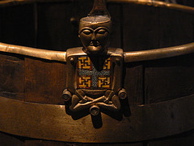
Photo by amateur_photo_bore and used under a Creative Commons license.

Comments

The Americas have always been the melting pot

Lets face it, our history is a bunch of fiction. People have been sailing the oceans forever. If the theory of the Bering Land Bridge were true, then most Native American peoples would look very similar. There isn't enough time for their physical features to morph into so many varieties. An Eskimo does not look like a Navaho, and a Navaho does not look like a Mayan, and a Mayan does not look like an Incan. The reality is geo political concerns are the major reason that we don't have any truth about when the Americas were first populated. For instance, what if the Chinese made to California first? It is all about the modern nations seeking to maintain control of the land. It was just recently proven that agriculture developed in the Americas at around the same time it was developed in the mideast. Perhaps it even developed in the Americas first. There is a very strong tendency for the human race to induce a self inflicted state of historical amnesia, in order to keep cherished belief systems safe. So sure the Vikings got to America and so did, the Egyptians, Romans, Greeks, Portuguese, Chinese, Indians, Europeans, and pretty much everyone else with boat. From North to South American is a huge amount of land, it is impossible to miss. The trade winds blow to it. Research is suppressed because it will offend religious and cultural beliefs.


There is so much proof that the Americas have always been a melting pot that to ignore it is just to choose to live in a fiction.  Which seems to be something of an epidemic these days.

Dis-cover What Ye Do Digge

So perhaps Quetzalcoatl is a hairy faced Norseman, riding a dragon prowed longship? I like it.

Of course, the past changes all the time, and we change with it. I like this Nietzsche quote, from Beyond Good and Evil:

"In the “in itself” there is nothing of “causal connections,” of “necessity,” or of “psychological non-freedom”; there the effect does not follow the cause, there is no rule of “law.” It is we alone who have devised cause, sequence, for-each-other, relativity, constraint, number, law, freedom, motive, and purpose; and when we project and mix this symbol world into things as if it existed “in itself,” we act once more as we have always acted, namely mythologically."

(from: http://www.geocities.com/thenietzschechannel/bgept1.htm )

Maybe the question becomes, what are we recognising in our archaeological digs, and has it ever belonged to the past?

If Quetzalcoatl is a Viking, maybe Jesus was a Hell's Angel?

Have thy heart in heaven and thy hands upon the earth - Thomas Vaughan

Newspapers make bad sources

There are a couple of major problems with that Norway 'Inca' story. One is the dating of the bones, which is about 2 centuries before therere were any Inca. But a huge problem is that the bone in question can be found all over the world.

From the Journal of Anatomy, 2001 February; 198(Pt 2): 137–152. doi: 10.1046/j.1469-7580.2001.19820137.x. Copyright © 2001 Anatomical Society of Great Britain and Ireland Os incae: variation in frequency in major human population groups TSUNEHIKO HANIHARA1 and HAJIME ISHIDA2

The variation in frequency of the Inca bone was examined in major human populations around the world. The New World populations have generally high frequencies of the Inca bone, whereas lower frequencies occur in northeast Asians and Australians. Tibetan/Nepalese and Assam/Sikkim populations in northeast India have more Inca bones than do neighbouring populations. Among modern populations originally derived from eastern Asian population stock, the frequencies are highest in some of the marginal isolated groups. In Central and West Asia as well as in Europe, frequency of the Inca bone is relatively low. The incidence of the complete Inca bone is, moreover, very low in the western hemisphere of the Old World except for Subsaharan Africa. Subsaharan Africans show as a whole a second peak in the occurrence of the Inca bone. Geographical and ethnographical patterns of the frequency variation of the Inca bone found in this study indicate that the possible genetic background for the occurrence of this bone cannot be completely excluded. Relatively high frequencies of the Inca bone in Subsaharan Africans indicate that this trait is not a uniquely eastern Asian regional character." So, although unusual, this could be a native Scandinavian -- or a traveler from the Silk Road. And Preston, you wrote "If the Vikings made it to Newfoundland, what was to keep them from moving much further down the coast during their adventurous travels?" Please look at an Atlas, the distance to Peru is at least 10 times probably much more than the distance between Newfoundland and Greenland. The distance you ask about is even several times the farthest the Norse went to get anywhere.

Doug Weller
Director and Moderator The Hall of Ma'at http://www.thehallofmaat.com
Doug's Archaeology Site: http://www.ramtops.co.uk

Uncalled for attack on archaeologists

Preston wrote "There are bound to be countless left to discover, now that "professional" scientists are actually taking the time to look for these sites and cities, rather than simply denigrating those independent researchers and amateur archaeologists who've been insisting for years that looking under the seas, oceans and lakes around the world is not only worthwhile but potentially quite lucrative both culturally and economically for those countries in whose waters such finds are discovered and opened for exploration and research." This is uncalled for an completely untrue. Archaeologists spend very little time (probably not enough in fact) explaining to the public why some of the nonsense claims made by 'independent researchers' are bunk. Discoveries like the ones listed above are really not that unusual, although the real ones mentioned are fascinating. Archaeology is not a well paid profession and they have to spend their time doing real work. Underwater archeology is a major field and there is good work done in it and some good publications usually ignored by those more interested in spectacular but ill-evidenced claims.

Doug Weller

Director and Moderator The Hall of Ma'at http://www.thehallofmaat.com
Doug's Archaeology Site: http://www.ramtops.co.uk

American Melting Pot

Pranava has a number of facts wrong. First, we know from experience that facial morphology can change within generations, we have seen that with immigrant populations in the USA and this has been know for about 100 years or so. Secondly, the people Pranava is insulting(probably unknowingly) by using the term Eskimo are the Yupik and the Inuit. Of course they look different from other Native Americans, we know they came over only about 6000 years ago across the Bering Strait. Thirdly, why all the fuss about a Bering land bridge? Horses and camels needed one, sure, but people. don't. When it's warm, you can cross it by small boat as the Yupik did to visit their relatives, when it is frozen you can walk across. So what almost certainly happened is over many years (30000 or more?) there were several migrations from Siberia to Alaska. It's clear that you don't need conspiracy theories to explain the different facial structures. If you want a non-Asian origin for Native Americans (which some people seem to really want for various reasons, some pretty bad) you need better evidence. We've got that evidence for the Norse. We don't have it for any other groups. Sorry about the several posts but I wanted to make each one on a separate subject.


Doug Weller
Director and Moderator The Hall of Ma'at http://www.thehallofmaat.com
Doug's Archaeology Site: http://www.ramtops.co.uk

Registering my disapointment

When you said seriously odd I expected more than this. What about the spark plug in million year old rock, the mammoth with a bullet hole in its skull or the fossilised modern stone cutting tools & workshop in France! Bah! Still though interesting stuff!


 "Become a detective of existence" - Prem Wat

Odd Archeological Mysteries...This One Takes The Cake!

For 12 1/2 years now I have been researching small portable petroglyphs (surface samples) found in the mid-west US.

With a degree in Anthro and a career in Microelectronics they amazed and fascinated me with their highly detailed photographic image reflections. And then I came to the realization that the reflections I was seeing were a communication...perhaps from an alien source and most certainly from an advanced inscription technology. Photographic images of rituals and events...ancient and modern Deities...Solid rock hard proof of contact.

And the aliens appear to be quite large, wearing ropes and crowns of laurel leaves and strapped down (chakte) helmets. And what is being communicated can be readily deciphered using our knowledge of history, mythology, archeology, science, and (of course) religion.

I have posted an incredible amount of detailed information and image reflections at the attached website URL (guaranteed to blow a mind or two)!

Laser Les

'Developing the most incredible images known to humanity'

www.impactoptics.com