The following article is adapted from the author's book, Everything is God.
The
conventional nondual inquiry begins with asking "Who am I?"
So,
who are you?
If
you ask most people what makes them who they are, chances are you'll get an answer that has to do with the self, the personality
— perhaps even the "soul," something distinctively individual, psychological or
spiritual. As all of us mature, we come to know ourselves, and form personal,
professional, familial, and other identities. And those identities are usually
disembodied (we usually say we have bodies, rather
thanthat we are bodies), and connected with thoughts, habits, preferences, and
feelings.
Yet
if you look closely at the personality (or mind, or heart, or soul), you
discover that it isn't there — at least, not in the way you thought. As a
simple experiment, raise your right hand right now. Go ahead, just pause for a
moment, raise your right hand, and then put it down. Now, whether you did or
didn't raise your hand, reflect on what actually happened. Did the thing you
call "you" really raise your right hand? In fact, what likely
happened were a series of mental processes, all of which were conditioned from
outside of "you." Maybe a sense of curiosity, or playfulness, or even
obedience, arose, which was probably learned when you were a small child, or
which maybe has something to do with your genetic predispositions. Or maybe
some feeling of laziness, obstinacy, or contrariness arose — just as much
learned from experience, from other people, from a thousand outside
sources. Sure, the bundle of all
of those feelings, plus myriads more, is conventionally referred to as
"you." But the bundle never actually does anything — it's a label,
nothing more. What actually acts, thinks, feels, dreams are one or more of
those pieces, usually in combination, all of which come from outside
"you" and none of which is actually "you." They are the
conditions which are necessary for the action to take place — not
"you." Who moved? The conditions moved.
In
fact, all of your hopes, fears, dreams, loves, hates, tastes, predilections;
each instance of who you are is wholly caused and
constituted by non-you elements. Now, we may get very used to these movements of the mind and
come to understand them as ourselves. But that doesn't make it so. Take a look
for a few minutes (or hours, or weeks). As a reaction, idea, or emotion arises in
the mind, try to notice it (obviously, a context of concentrated meditation makes this far
easier) and query whether it's "you" or something that is "not-you."
One
of the Buddha's ways to explain the non-self-ness of objects was to have his
monks mentally take apart a chariot and ask where "chariot" comes
into being, what "chariot" does as opposed to constituent parts like
wheels, carriage, etc. Ultimately, even those parts are reduced to the four
elements (in traditional science) or, in our science, to the properties of
their molecular properties, atoms, and subatomic particles. You can try this
too, with a chair. Is the "chair" holding you up right now? Or is it
really the various molecular bonds in the wood, metal, or plastic? Is the
"chair" white, or black, or another color, or is it the molecular
properties of the pigmentation? And do you ever perceive the "chair,"
or rather, different elements of it, like its size, color, and texture? And so
on.
If
the preceding perspectives on non-self seem too empirical, or even naive,
consider the insights of the last fifty years of postmodern philosophy, which
have relentlessly insisted that what we call the "self," i.e., the
modern subject, is actually a social construction, an assemblage of memes,
narratives, and values entirely made up of historically conditioned factors. My
supposed need for security, home, and hearth is a late capitalist, bourgeois affectation
conditioned by nineteenth and twentieth century advertising and cultural
production. My tastes, preferences, styles, and self-identifications all are
cultural constructions.
Consciousness
is really made up of memes, units of information that replicate themselves, a bit like genetic information
does. (The term was coined by
evolutionary biologist Richard Dawkins in 1976 in The Selfish Gene.)
Every notion that you have, about politics, justice, identity, music, love,
whatever, is a meme, constituted outside of "you" and replicated in sophisticated
ways. To think that they are "you" is what epistemologist Wilfrid Sellars called "the myth
of the given." It's what happened when Descartes moved from the arising of thought (cogito)
to the existence of the full-on modern subject (sum). A postmodernist would reply:
yes, the thought arose — but that doesn't mean there was a "you" thinking
it. There was just a set of memes thinking the thought, interpreting it, and constructing a self on
the basis of it.
In
postmodern terms, enlightenment is what philosopher Susan Blackmore calls waking up from the meme dream. Neuroscientifically, writes Daniel
Dennett in Consciousness Explained,
"human consciousness is itself a huge complex of memes, "a vast
assemblage of learned behaviors which, like software, operate the hardware
of the brain. As Blackmore puts it, "we are just co-adapted meme-complexes. We,
our precious, mythical 'selves', are just groups of selfish memes that have come together by
and for themselves." The false self is a meme complex.
Back
in the 'spiritual' world, ondual Zen roshi Genpo Merzel uses voice dialogue to enable his students to see that, really,
we are always performing one or another of these roles, like actors in a play. Seeing these voices and memes face to face can be of great therapeutic value, as shunned voices
are known and recognized, and points directly to non-self. For Genpo, the self is
like a corporation: it's a set of agreements, a point of reference, and nothing more.
All these voices are just the employees — only, unlike actual employees, most
of them have no idea what the mission of the corporation actually is.
At
some point, you may want to take a stand, draw a line, and insist on some turf that's your own. That's fine. You learned that
somewhere else too.
I
remember sitting at Penn Station in New York one morning, and the obviousness
of nonduality simply appeared, in the midst of the crowd. All around me, I
watched as thousands of people were replicating memes unconsciously, mistaking
memes for self. Habits learned, dispositions, instincts. And suffering the
predicament: natural desires to make more, do more, be more. If it weren't for
the desire, we'd be extinct; in this sense, happiness is "unnatural."
But it is possible too for consciousness to awaken, see what is happening, look
around, and then happiness becomes most natural thing in the world. Life a
profusion, flowing in a trillion faces, ants to adam, eagles to eve. And no
separateness, no arrogance: Jay is also a feature of the ocean, and this voice
too, though perhaps more aware of conditions. But that morning in Penn Station,
early morning, tired and awaiting the train platform to be called, there was an
I behind the I, that is awake and full of compassion and joy.
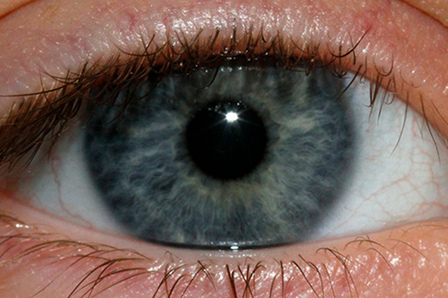
Image by dottie mae, courtesy of Creative Commons license.